Food for Thought-Who processes your meat?
posted on
April 14, 2026
A few days ago, I received a thoughtful question from a customer. It’s one of those questions that sits at the heart of what we do—but isn’t talked about nearly enough.
“What are the slaughter options for small farms in Colorado? And how humane are they?”
If you eat meat, this is a question worth asking. Not to make anyone uncomfortable—but because understanding it connects us back to our food in a way our modern system often avoids. Let’s talk about the different paths meat takes from the farm to your kitchen.
When it comes to meat processing, there are really two paths:
1. The Industrial Model
Most (about 85%) of meat in the U.S. flows through large, centralized processing plants owned by a handful of corporations.Animals are:
- Raised (often far from where they’re processed)
- Transported long distances
- Processed at high speeds in large facilities (thousands of beef a day)
These plants are USDA-inspected and designed for efficiency and scale.That system has made meat widely available and relatively inexpensive—but it also creates distance:
- Distance between farmer and animal
- Distance between consumer and reality
- And often, distance from the kind of care many people assume animals receive
2. The Independent / Small Farm Model
For small farms like ours, things look very different—and more complicated.There is no one-size-fits-all option.In Colorado, we operate within a mix of state and federal rules that shape what we can and cannot do.
What’s Allowed in Colorado?
On-Farm Processing (Limited)
In 2021, Colorado passed the Ranch to Plate Act, which opened the door for small farms to process certain animals on-farm.This allows:
- On-farm harvest of animals
- Sales through ownership shares (not retail cuts)
- Up to 1/100th ownership per animal
- Sales must stay within Colorado.
This is why our CSA model matters—it allows customers to legally share in an animal.Important limitations:
- No USDA inspection, and customers must be informed of that.
- Poultry and fish are excluded from this law.
USDA Processing
For most beef and pork, we still rely on USDA-inspected facilities.Why?Because USDA processing allows:
- Individual retail cuts
- Broader sales options
- Access for customers who aren’t part of a share program
- Allows us to outsource some labor.
We choose processors carefully and believe ours does a good job making the process as humane as possible within that system. They are also built to handle processing at a scale that matches what we raise. For example, we took 14 pigs a couple of weeks ago. For us to process that many on farm, it would take us at least that many days to properly chill, cut, and freeze. Not to mention, we lack much of the equipment for curing bacon and hams.
On-Farm Poultry Processing
Poultry is its own category.We operate under the federal exemption P.L. 90-492, which allows farms to:
- Process birds on-farm
- Sell directly to the consumer
- Stay within Colorado
Without this exemption, our nearest USDA poultry processor is on the eastern side of Kansas—not exactly practical for our farm or our birds.
What Does “Humane” Really Mean?
This is where things get less about regulations—and more about values.For us, humane is not just about the final moment.It includes:
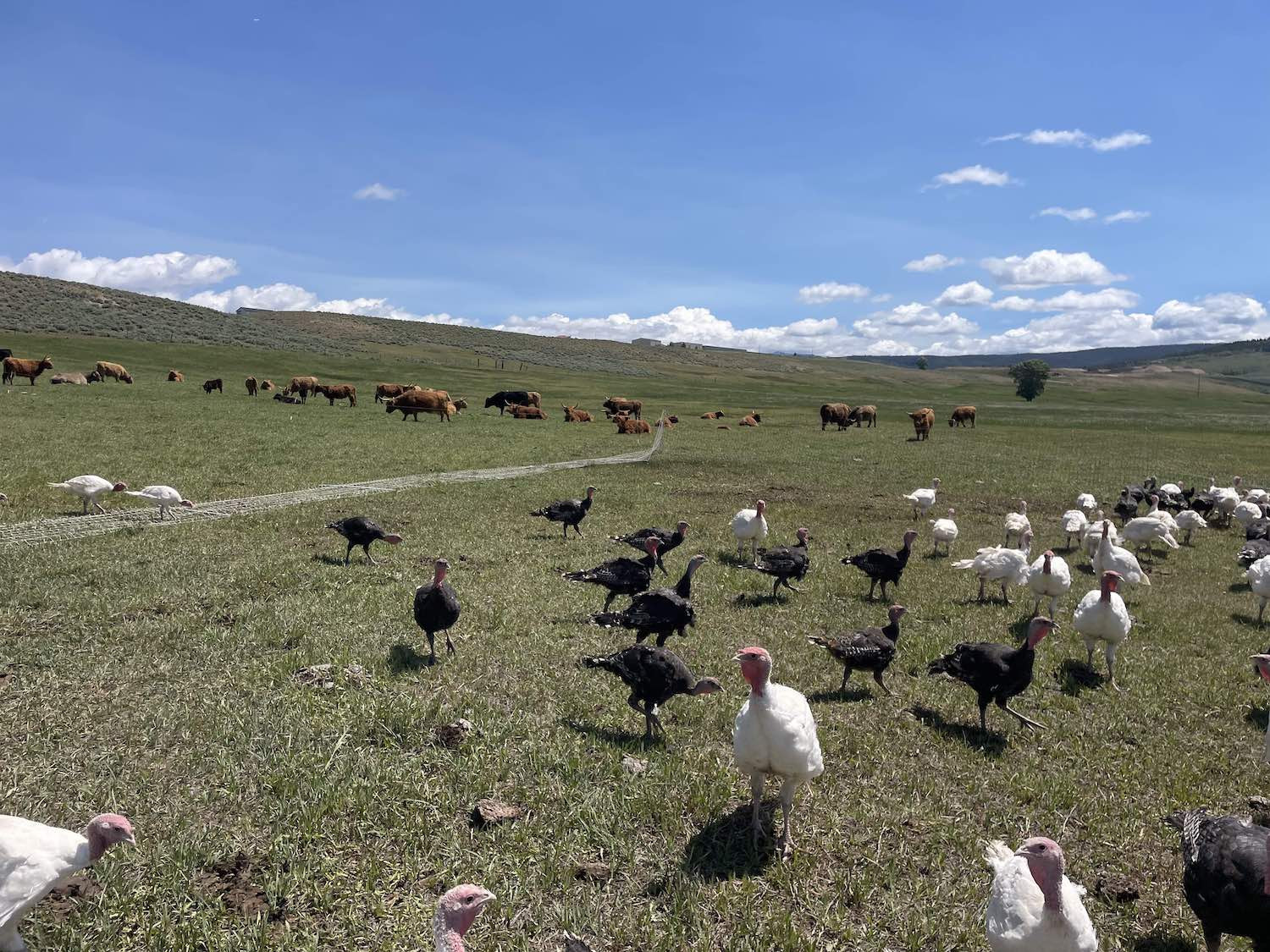
- A life outdoors, in fresh air and sunshine
- The ability to forage, root, graze, and express natural behaviors
- Low-stress handling throughout life
And when it comes to the end…We’ve made a choice on our farm:Our breeding animals—the mamas who gave us generations—are not shipped away.They:
- Stay on the land they know.
- Avoid the stress of loading in a trailer and being driven over a mountain pass to a building and handlers they've never seen
- They are harvested by the farmer who cared for them.
It is, without question, the hardest part of what we do. And when I say 'we' I mean Asa, this task falls on his shouldersAnd also the most sacred. We feel it honors their lives to the fullest.
A Thought We Sit With Often
There’s a common belief that eating chicken is somehow more ethical than eating beef or pork.But here’s something we think about:
- One chicken feeds a family for a meal.
- One pig or cow can feed a family for months.
Every meal that includes meat required a life.The question isn’t if something died.The question is:
- How did it live?
- And how was that life honored?
Why This Matters
Our food system has made it easy to forget this part of the process. It’s possible to mindlessly grab meat from the store without thinking about how it got there. Your reading this means you have already put a great deal more thought into your food than many ever do.We don’t believe disconnection serves anyone—not the animals, not the farmers, and not the families we feed. You don’t have to raise your own animals. But understanding where your food comes from—and asking these questions—matters. It changes how we value food. It changes how we support farmers. And it changes the kind of system we build moving forward.
Food for Thought
If you eat meat, someone, somewhere, had to be the one to take that life.At Sisu Farms, we believe:
- That responsibility should never be hidden.
- Never taken lightly
- And always handled with respect.
Because the food that fuels our lives…
It is one of the most sacred things we do every day…eat, and thinking about where and how that food is grown and raised should be part of that.
If this sparked questions for you, I’d love to hear them.
This is a conversation worth having—openly and honestly.Thank you for being part of the conversations with us, even the uncomfortable ones
Aila